The Eco Wash Difference
See the Results
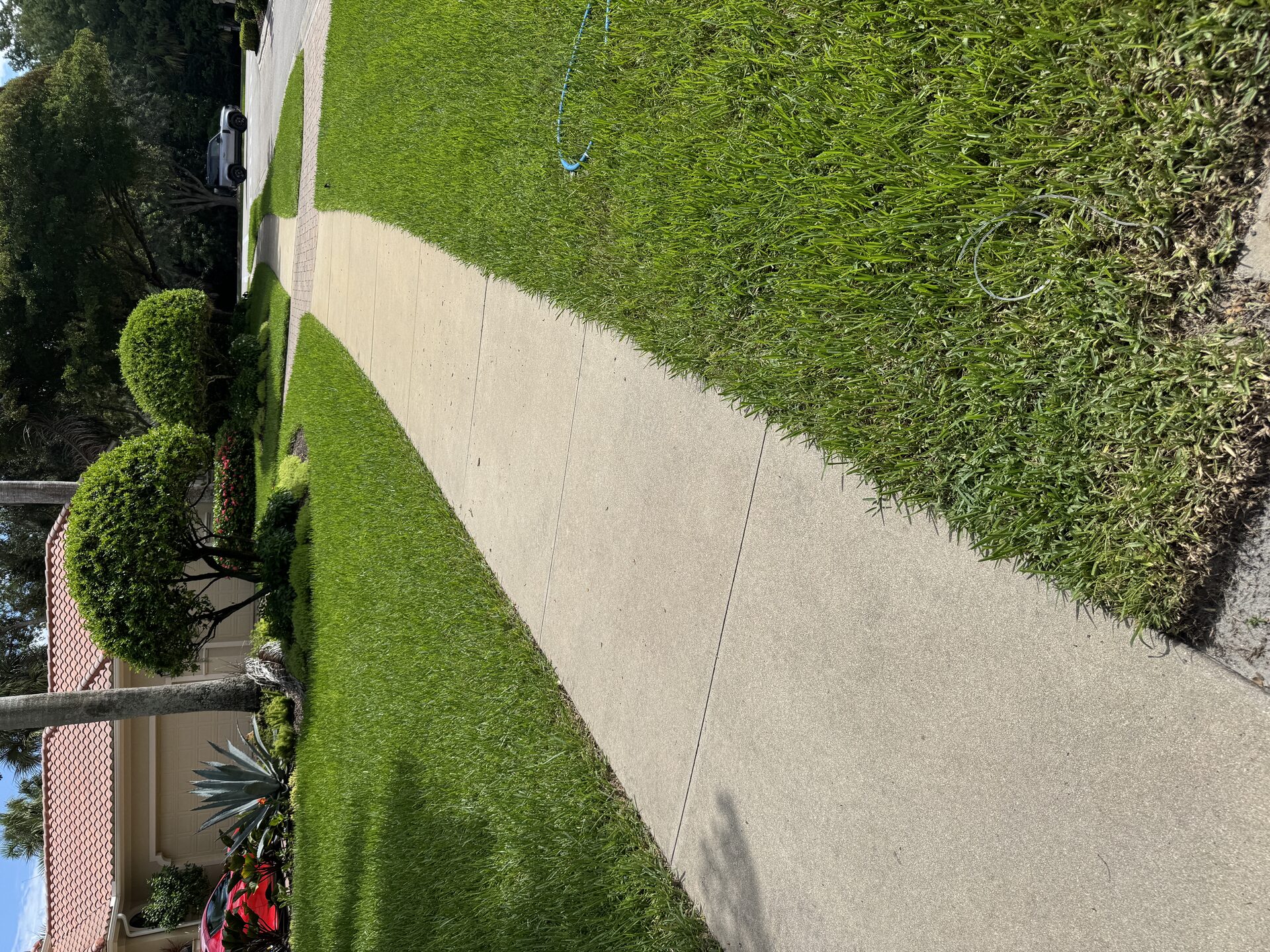
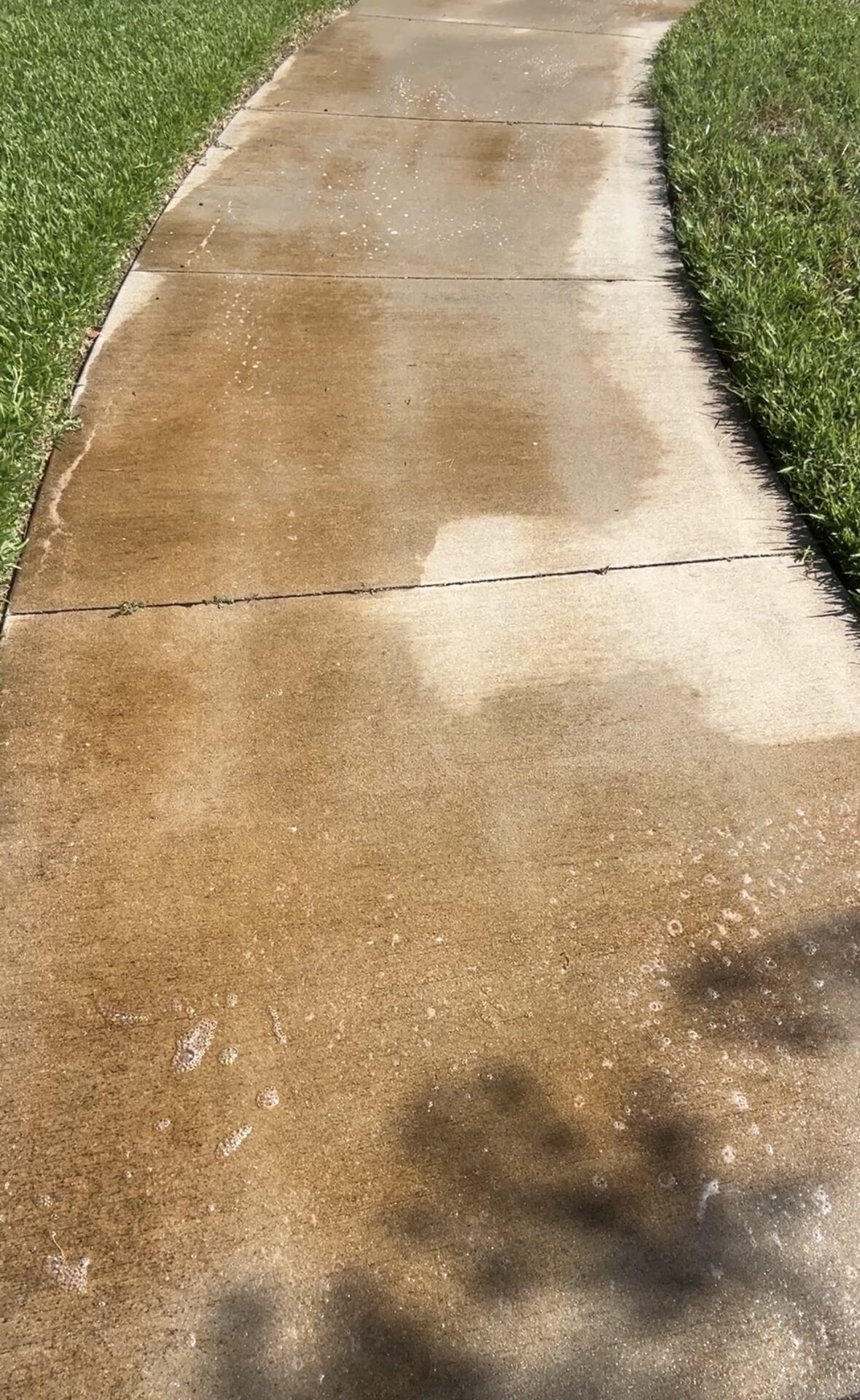
ECO Friendly application in action — safe for surfaces, safe for plants, and long-lasting results.
If you're researching exterior cleaning for your Naples or Fort Myers home, you need to understand the difference between bleach-based soft washing and non-caustic eco washing. The wrong choice can damage your roof, paint, landscaping, and more.
Request a Property AssessmentThe majority of pressure washing companies in Naples and Fort Myers use sodium hypochlorite (bleach) as their primary cleaning agent. It's cheap, it's fast, and it makes surfaces look clean — temporarily. But bleach is a harsh, caustic chemical that causes real damage to your home's exterior surfaces over time. Here's what every homeowner should know before hiring a cleaning service.
The fundamental difference comes down to chemistry. Soft washing relies on sodium hypochlorite (bleach) — a caustic chemical that oxidizes organic matter. Eco washing uses non-caustic ECO Friendly solutions that eliminate stains caused by algae and mold without degrading the surfaces underneath.
| Feature | Soft Washing (Bleach/Sodium Hypochlorite) | Eco Washing (ECO Friendly Solution) |
|---|---|---|
| Primary Chemical | Sodium hypochlorite (bleach) — caustic, strong oxidizer | Non-caustic ECO Friendly solution — pH neutral |
| How It Works | Oxidizes organic matter on contact — burns away growth | Penetrates and eliminates stains at the root level — no surface damage |
| Effect on Paint | Breaks down paint binders, causes fading, chalking, and peeling | Safe for all painted surfaces — no oxidation or degradation |
| Effect on Roof Tiles | Etches glaze, degrades sealant, allows moisture penetration | Safe for barrel tile, flat tile, and all roofing materials |
| Effect on Landscaping | Burns plants, damages grass, requires pre-wetting and covering | Safe for plants and landscaping — no toxic runoff |
| Effect on Screen Enclosures | Oxidizes aluminum frames, degrades screen mesh | Safe for screen mesh and aluminum — no corrosion |
| Pet & Child Safety | Toxic residue — pets and children should avoid treated areas | Safe for pets and children once dry |
| Environmental Impact | Bleach runoff enters storm drains and waterways | No harmful runoff — safe for storm drains |
| Duration of Results | Regrowth visible in 60-90 days | Protective surfactant: 6+ months protection, 2-3 year regrowth prevention |
| Odor | Strong chlorine smell — lingers for hours | Mild, pleasant — dissipates quickly |
Sodium hypochlorite is a powerful chemical. It doesn't just clean — it chemically burns. Here's what it does to the surfaces that protect and beautify your home.
Bleach is a strong oxidizer. When applied to painted surfaces, it breaks down the chemical bonds in paint binders. This causes oxidation, fading, chalking, and eventually peeling. Repeated bleach applications will significantly shorten the life of your exterior paint — meaning you'll need to repaint sooner and more often.
Barrel tiles have a protective glaze that gives them their color and weather resistance. Bleach gradually etches and degrades this glaze, leaving the tile porous and vulnerable to moisture penetration. Once water gets into the tile, it can crack during temperature changes. The result: premature tile failure and costly replacements.
Flat tiles face the same glaze degradation as barrel tiles. Bleach breaks down the surface sealant and allows organic matter to penetrate deeper into the tile body, leading to faster regrowth and structural weakening over time.
Asphalt shingles are coated with granules that protect the underlying asphalt from UV damage. Bleach dries out the asphalt base and accelerates granule loss, which exposes the shingle to sun damage and shortens its lifespan. Many shingle manufacturers explicitly warn against bleach and will void warranties for its use.
Bleach burns plants on contact. Even with pre-wetting and covering, overspray and runoff can scorch leaves, damage grass, and damage roots. In Southwest Florida's lush landscapes, a single bleach application can destroy thousands of dollars in landscaping overnight.
Bleach oxidizes aluminum frames, causing pitting and corrosion that weakens the structure. It also degrades the nylon coating on screen mesh, making screens brittle and prone to tearing. Over time, repeated bleach treatments will shorten the life of your entire enclosure.
Stucco is porous by nature. Bleach penetrates the surface and breaks down the binders that hold the stucco together. Over time, this causes surface chalking, cracking, and accelerated weathering. The damage is often invisible until it's too late.
Bleach leaves a toxic residue on surfaces that can persist long after the cleaning is done. Pets who walk on or lick treated surfaces can ingest harmful chemicals. Children playing on driveways or patios after a bleach treatment may be exposed to chlorine residue.
Pressure washing roofs is one of the most damaging things a homeowner can do. The high-pressure water (often 1,000 to 4,000 PSI) that makes pressure washing effective on driveways is catastrophic when aimed at roofing materials. Here's why no reputable roof manufacturer or insurance company condones pressure washing:
High-pressure water cracks barrel tiles, snaps flat tiles at their seams, and dislodges them from the roof deck. One pressure washing session can cause thousands of dollars in tile damage that may not be visible until the next rain.
Pressure washing forces water under tiles and shingles, into underlayment, and through roof decking. This trapped moisture causes wood rot, mold growth inside the attic, and ceiling leaks that appear weeks or months later.
On asphalt shingles, pressure washing literally blasts the protective granules off the surface. These granules are the shingle's defense against UV rays. Without them, the asphalt dries out, cracks, and fails years before its rated lifespan.
Every major roofing manufacturer — GAF, CertainTeed, Tile Roof Institute, and others — explicitly states that pressure washing voids the material warranty. If your roof fails after pressure washing, you have no recourse.
Many insurance companies in Florida now ask whether a roof has been pressure washed. If damage is found and pressure washing is determined to be the cause, claims may be denied. It's considered negligence by many carriers.
Eco washing uses low pressure (under 100 PSI) with a non-caustic ECO Friendly solution. It eliminates stains caused by algae, moss, and lichen at the root level without any mechanical force on the roofing material. Rain naturally washes away the dead growth over the following weeks.
ECO Friendly application in action — safe for surfaces, safe for plants, and long-lasting results.
We're not going to pretend eco washing is perfect for every situation. Here's an honest breakdown so you can make an informed decision.
Chris Rockwell didn't start with eco washing because it was trendy. He started with it because he saw the damage bleach was doing to Southwest Florida homes. After years in the industry, he realized that bleach-based soft washing was a cycle — it cleaned surfaces today but degraded them for tomorrow. Every bleach treatment shortened the life of the roof, paint, and screens it was supposed to protect.
Eco washing with ECO Friendly solution is different. It eliminates stains caused by algae, mold, and mildew at the root level without caustic chemicals. Surfaces stay cleaner, longer. Paint lasts. Roofs last. Plants survive. And the runoff going into Southwest Florida's storm drains and waterways is free of toxic chlorine.
It costs a little more per treatment. But over a year, you need fewer treatments, and you're not paying to repair the damage that bleach caused. That's not just better for your home — it's better economics.
Common questions from Southwest Florida homeowners about exterior cleaning methods.
Traditional soft washing uses sodium hypochlorite (bleach) which can degrade tile glaze, dry out asphalt shingles, and cause premature granule loss. While it removes visible growth, it does so through aggressive chemical oxidation that can shorten the life of your roof. Eco washing uses non-caustic ECO Friendly solutions that eliminate stains caused by algae and mold without damaging the roofing material.
Yes. Pressure washing roofs is one of the most damaging things you can do to them. High-pressure water cracks barrel tiles, strips the protective glaze off flat tiles, dislodges granules from asphalt shingles, and forces water under the roofing material causing leaks. Most roof manufacturers will void your warranty if pressure washing is used. The safe alternative is a low-pressure ECO Friendly application that treats the organic growth at the root without blasting the surface.
Sodium hypochlorite (bleach) is a strong oxidizer. When applied to painted surfaces, it breaks down the chemical bonds in paint binders, causing oxidation, fading, chalking, and premature peeling. Over time, repeated bleach applications will significantly shorten the life of your exterior paint. Eco washing uses non-caustic solutions that do not oxidize or degrade paint.
Yes. Unlike bleach-based soft washing, which can burn landscaping, damage grass, and harm pets who contact treated surfaces, eco washing uses non-caustic ECO Friendly solutions that are safe for plants, animals, and people when properly applied. There is no toxic runoff into storm drains or waterways.
The ECO Friendly solution has a protective surfactant that protects surfaces for over 6 months, preventing any micro spores from starting to grow — preventing visible regrowth for 2 to 3 years per treatment. It targets and eliminates the organic growth at the root level. Bleach-based soft washing often shows regrowth within 60 to 90 days because it oxidizes the surface growth but does not fully eliminate the root structure. Over a year, eco washing requires fewer treatments and delivers better long-term value.
Pressure washing uses high-pressure water (1,000-4,000 PSI) to physically blast dirt and growth off surfaces. Soft washing uses low pressure with chemical solutions (typically bleach) to clean surfaces. Eco washing is a third method that uses low pressure with non-caustic ECO Friendly solutions. Neither pressure washing nor bleach soft washing is safe for roofs. Eco washing is the only method that is both effective and surface-safe.
We strongly advise against it. Pressure washing a roof voids most manufacturer warranties, can crack tiles, strip granules from shingles, and force water into your home's structure. If a roofer or insurance inspector finds pressure washing damage, your roof claim may be denied. The only safe roof cleaning method is a low-pressure ECO Friendly application applied by a licensed professional.
Ask them directly what chemical they use. If they say "sodium hypochlorite," "SH," "chlorine," or "pool shock," they use bleach. If you smell strong chlorine during or after a cleaning, bleach was used. A reputable company should be transparent about their chemicals and their safety data sheets. Rocky's Exterior Wash uses non-caustic ECO Friendly solution and is happy to explain exactly what we apply and why.
Protect your roof, paint, and landscaping with non-caustic ECO Friendly exterior cleaning.
Request a Property Assessment