Real Results
ECO Friendly Sidewalk Application in Action
No surface cleaner lines. No drain clogging. No bleach runoff. Just clean sidewalks that stay clean.
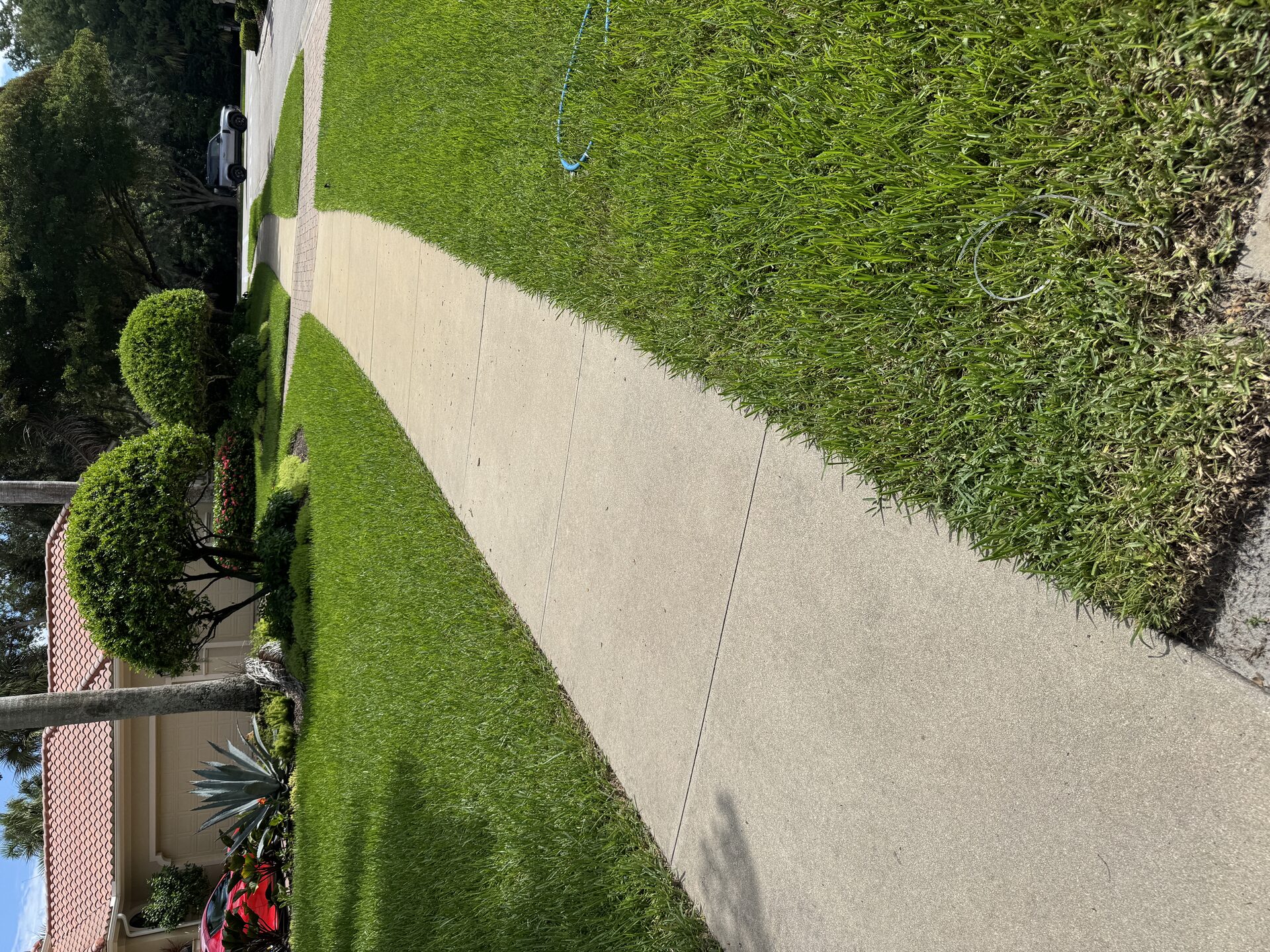
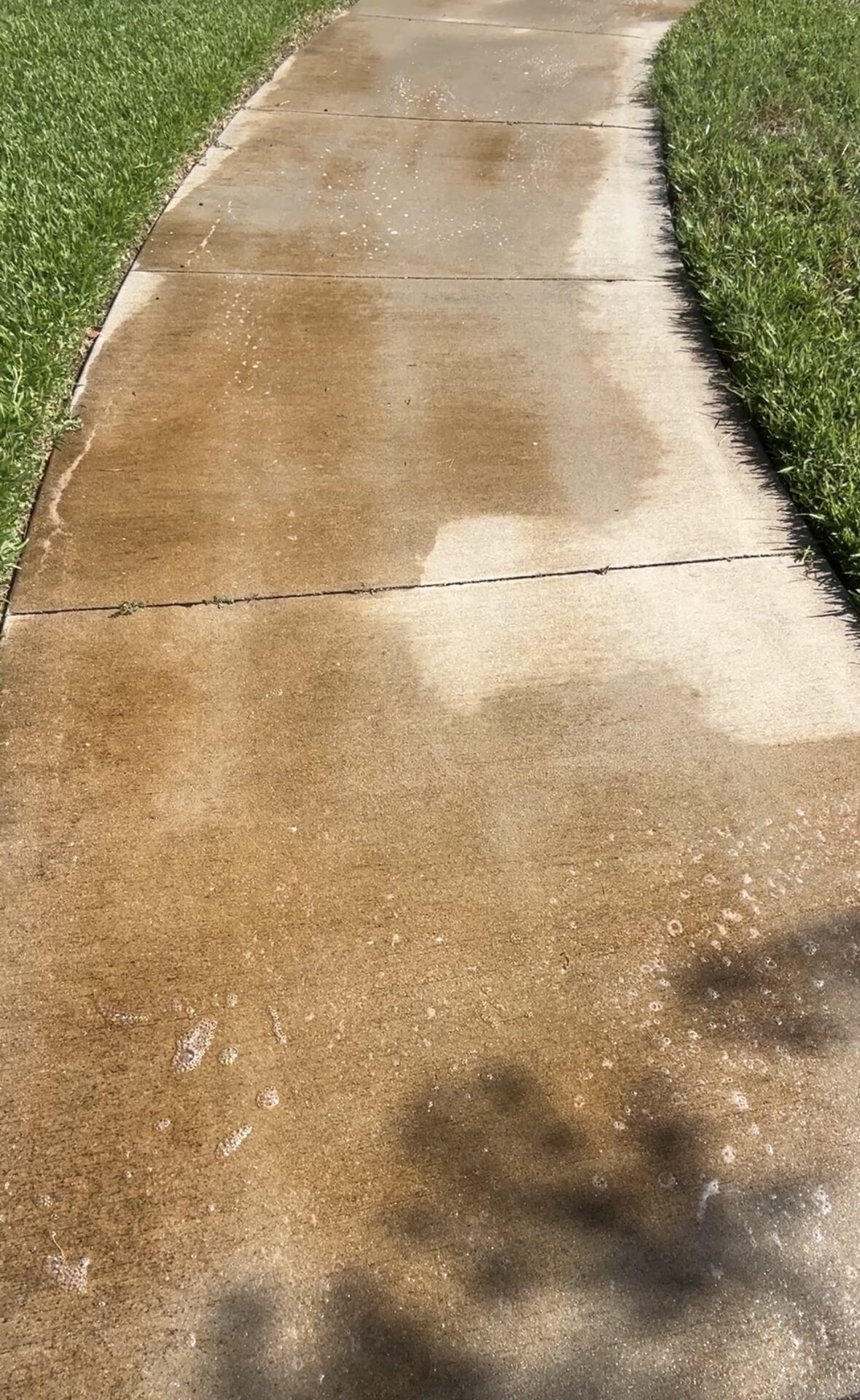
If you manage an HOA community in Southwest Florida, the method used to clean your sidewalks matters more than you think. Pressure washing leaves visible lines, clogs storm drains, and sends debris and bleach into local waterways. Here's what every property manager and board member should know.
Request a Property AssessmentThe standard approach in Southwest Florida is pressure washing — blasting sidewalks with high-pressure water, often preceded or followed by a bleach application. It makes the sidewalk look clean that day. But within months, the problems start. Here's what happens when you pressure wash community sidewalks year after year.
Pressure washing uses a surface cleaner with spinning nozzles that clean in circular patterns. The areas it passes look great — but the spaces between passes, the edges, and the corners don't get the same treatment. Within 6 months, the organic growth returns at different rates across the surface, and you can see distinct stripes across the entire sidewalk. The cleaner it was the day of service, the more visible the lines become as growth returns unevenly.
Pressure washing doesn't just remove organic growth — it blasts dirt, debris, sand, and plant matter off the sidewalk surface. All of that material has to go somewhere. When the rinse water flows into the storm drainage system, it carries all that debris with it. During Southwest Florida's rainy season (June through October), those clogged drains back up, causing flooding, standing water, and property damage. The very cleaning that was supposed to maintain the community is causing drainage failures.
Many companies apply sodium hypochlorite (bleach) before or after pressure washing to boost results. When that bleach is rinsed off the sidewalks, it flows directly into storm drains. In Southwest Florida, storm drains connect to canals, creeks, estuaries, and ultimately the Gulf of Mexico. Bleach is highly toxic to aquatic life, damages seagrass beds, and can trigger harmful algae blooms. HOA communities that use bleach are contributing to the very water quality problems that affect Florida's coastline and wildlife.
Pressure washing removes the visible surface growth but does nothing to treat the root structure of algae and mildew embedded in the concrete. The roots are still alive, still feeding, and still spreading. Within 60 to 90 days, the sidewalk looks like it was never cleaned. This means more frequent service visits, higher annual maintenance costs, and a community that never looks consistently clean — it's always either freshly washed or visibly dirty.
When bleach is applied to sidewalks, overspray and runoff inevitably reach adjacent landscaping. Grass along the sidewalk edges burns. Shrubs and flowers get scorched. In HOA communities with extensive and expensive landscaping, a single bleach application can cause thousands of dollars in plant damage. The company may pre-wet plants, but it's a band-aid — bleach still gets into the soil and root systems.
Repeated high-pressure washing gradually etches the concrete surface, making it more porous. More porous concrete absorbs moisture and organic spores more easily — which means faster regrowth with each passing year. The pressure washing that was supposed to maintain the sidewalk is actually making it dirtier, faster, over time. It's a cycle that gets worse every year.
Concrete has a thin top layer called the "cream" — the fine paste of cement and sand that rises to the surface during pouring and curing. This cream layer is what gives concrete its smooth, sealed finish. But most community sidewalks are poured in multiple stages throughout a development's construction — different batches, different crews, different weather conditions on pour day. Some sections cure properly with a strong cream layer. Others are poured too wet, too dry, or finish-cured incorrectly, leaving a weak, fragile cream layer that looks fine but can't withstand high pressure.
When a pressure washer hits a weak cream section, it blasts right through that top layer, exposing the aggregate (the gravel and sand) underneath. Once the cream is gone, that section of sidewalk is permanently damaged — it becomes rough, porous, absorbs water and organic spores rapidly, and degrades faster with every passing year. You can't repair it without replacing the concrete. And because most communities have multiple pours from different construction phases, you never know which section will fail until the damage is already done.
Here's how the two methods compare when used on HOA community sidewalks in Southwest Florida.
| Factor | Pressure Washing (Traditional) | Eco Washing (ECO Friendly) |
|---|---|---|
| How It Cleans | High-pressure water (2,000-4,000 PSI) physically blasts growth off | Low-pressure application of non-caustic ECO Friendly solution that eliminates growth at the root |
| Surface Cleaner Lines | Visible stripes appear within 6 months as growth returns unevenly | No lines — entire surface treated evenly |
| Duration of Results | Regrowth visible in 60-90 days | Protective surfactant: 6+ months protection, 2-3 year regrowth prevention |
| Effect on Storm Drains | Blasts dirt, sand, and debris into drainage system — clogs during rainy season | No debris blasted into drains — organic matter treated chemically |
| Chemical Runoff | Bleach (sodium hypochlorite) runoff enters storm drains and waterways | Non-toxic runoff — safe for storm drains, canals, and the Gulf |
| Effect on Concrete | Gradually etches surface, making concrete more porous and prone to faster regrowth | No surface etching — low pressure preserves concrete integrity |
| Effect on Landscaping | Bleach overspray burns grass and plants along sidewalk edges | Safe for all landscaping — no pre-wetting needed |
| Annual Service Frequency | 4-6 visits per year needed to maintain appearance | 2-3 visits per year — results last twice as long |
| Long-Term Cost | Higher — more visits, drain cleaning, concrete degradation, plant replacement | Lower — fewer visits, no drain damage, no landscaping replacement |
| Visual Consistency | Cycles between "just cleaned" and "dirty" — never consistently clean | Stays consistently clean between visits |
No surface cleaner lines. No drain clogging. No bleach runoff. Just clean sidewalks that stay clean.
Both methods have their place. Here's an honest breakdown for property managers and board members evaluating sidewalk maintenance programs.
The smartest sidewalk maintenance program for HOA communities uses ECO Friendly application as the primary treatment and pressure washing only as a supplemental tool for stubborn stains. This hybrid approach gives you the best of both methods:
1. ECO Friendly application (primary): Applied to the entire sidewalk on a rotating schedule. Eliminates organic growth at the root, has a protective surfactant that protects surfaces for over 6 months, preventing visible regrowth for 2 to 3 years. No surface lines, no drain clogging, no toxic runoff.
2. Pressure washing (supplemental): Used only for specific areas with oil stains, tire marks, or heavy buildup that the ECO Friendly application can't fully address. Targeted use minimizes surface etching and drain debris.
This is exactly how Rocky's Keep It Clean Program works. ECO Friendly application does the heavy lifting. Pressure washing is deployed surgically — only where it's actually needed. The result: consistently clean sidewalks, lower annual costs, protected storm drains, and no toxic chemicals entering Southwest Florida's waterways.
Common questions from HOA property managers and board members in Southwest Florida.
Pressure washing uses a surface cleaner with spinning nozzles that clean in circular patterns. Over time, especially in high-traffic community areas, the areas between cleaning passes develop organic growth at different rates. Within 6 months, you can see the distinct lines where the surface cleaner passed — creating a striped, uneven appearance across the sidewalk.
Yes. Pressure washing blasts dirt, organic matter, and debris off sidewalks, and that material has to go somewhere. When the rinse water flows into storm drains, it carries all that debris with it. During Southwest Florida's rainy season (June through October), these clogged drains can cause flooding, standing water, and property damage in HOA communities.
Yes. When companies use sodium hypochlorite (bleach) before or after pressure washing, the chemical runs off sidewalks and into storm drains during rinsing. In Southwest Florida, storm drains flow directly into canals, creeks, estuaries, and ultimately the Gulf of Mexico. Bleach is toxic to aquatic life and can cause algae blooms that harm water quality.
The ECO Friendly solution has a protective surfactant that protects surfaces for over 6 months on community sidewalks, preventing any micro spores from starting to grow — preventing visible regrowth for 2 to 3 years. It eliminates the organic growth at the root level. Pressure washing results are visible for only 60-90 days because it removes the surface growth but does not treat the root structure — meaning regrowth starts immediately.
For HOA communities in Naples, Fort Myers, and surrounding areas, eco washing with ECO Friendly solution is the best primary method. It lasts longer, doesn't leave surface cleaner lines, doesn't clog storm drains with debris, and doesn't send toxic bleach runoff into local waterways. Pressure washing can be used supplementally for stubborn oil stains. This hybrid approach is what Rocky's Keep It Clean Program uses.
While the per-visit cost of eco washing may be slightly higher than pressure washing, the annual cost is typically lower because you need fewer visits. The ECO Friendly solution's protective surfactant protects surfaces for over 6 months and prevents visible regrowth for 2 to 3 years, versus just 60-90 days for pressure washing, meaning 2-3 visits per year instead of 4-6. You also avoid the hidden costs of drain cleaning, landscaping replacement, and concrete degradation that pressure washing causes over time.
Yes. Many HOA communities switch to eco washing after years of pressure washing. The first eco wash application may need to be slightly more concentrated to address accumulated organic growth in the porous concrete left by years of pressure etching. After the initial treatment, subsequent applications maintain clean sidewalks with fewer service visits.
Protect your community's storm drains, landscaping, and waterways with ECO Friendly sidewalk maintenance.
Request a Property Assessment